
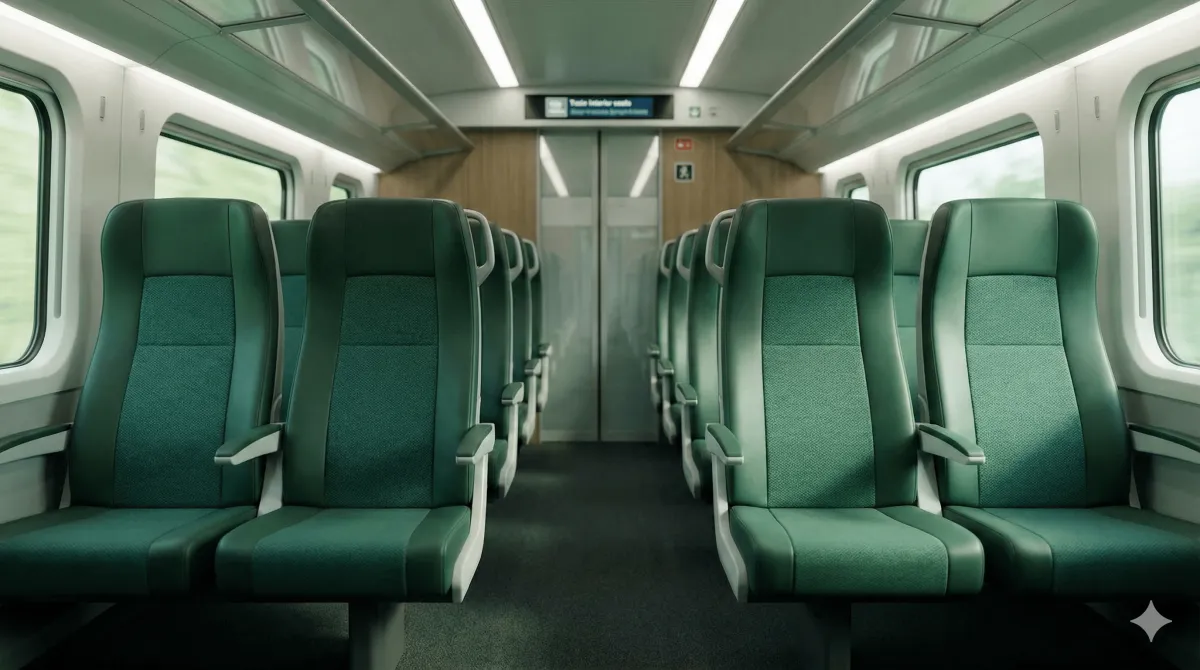
On German routes, you face the choice: ICE or Plane? Both transport modes have their pros and cons. We'll show you when each option makes sense.
ICE Train
- Cheaper (Saver fares at low prices)
- 5-10x more environmentally friendly
- More comfort (WiFi, power outlets)
- Longer on routes over 600 km
Plane
- Faster on long routes
- Often cheaper last-minute
- More expensive (often €100-300)
- 5-10x more CO2 emissions
Detailed Comparison
| Criterion | ICE | Plane |
|---|---|---|
| Price (booked early) | Cheap (at low prices Saver) | More expensive (often €100-300) |
| Price (last-minute) | More expensive (Flex fare €50-150) | Often cheaper (€50-150) |
| Travel time (incl. check-in/transfer) | 3-6 hours (direct) | 4-8 hours (with check-in) |
| CO2 emissions | 30-50g CO2/km | 200-300g CO2/km |
| Comfort | More legroom, WiFi, power outlets | Tight seats, limited luggage |
| Flexibility | Flex fare: any train, rebookable | Often cancellable, but expensive |
| Luggage | Generous (suitcases, bicycle possible) | Limited (extra charge for extra luggage) |
| Availability | Daily, including weekends | Limited, fewer connections |
Example Routes: ICE vs. Plane
| Route | ICE | Plane |
|---|---|---|
| Berlin → Munich | 4h 15min at low prices | 5-6h (with check-in) expensive |
| Hamburg → Frankfurt | 4h at low prices | 4-5h (with check-in) expensive |
| Cologne → Berlin | 4h 20min at low prices | 4-5h (with check-in) expensive |
| Munich → Hamburg | 6h 30min at low prices | 5-6h (with check-in) expensive |
When to Choose Which?
Choose ICE when...
- You can book early (Saver fares)
- The route is under 500 km
- You value sustainability
- You need flexibility
- You have a lot of luggage
Choose Plane when...
- The route is over 800 km
- Time is the most important factor
- You're traveling last-minute
- You have little luggage
- You don't need flexibility
Environmental Impact: ICE is Clearly Better
30-50g CO2/km
ICE (Germany)
200-300g CO2/km
Plane (short-haul)
The train is 5-10x more environmentally friendly than the plane. On a trip from Berlin to Munich (504 km), you save about 100-150 kg CO2 per person by taking the ICE.
Notice: All information is provided without guarantee. Schedules and availability may change at any time. For current and binding information, please visit the official provider websites. This website is not affiliated with Deutsche Bahn AG or other railway companies.
Last update: March 2026
Sources & More Information:
- Omio– Compare Providers
- Omio– Compare ticket prices
- CO2 Comparison– German Federal Environment Agency